Best Ham Radios Under $50: What Cheap Buys You in 2026
Under $50 buys a genuinely usable dual-band handheld in 2026. The TIDRADIO TD-H3 is the best pick for most beginners (USB-C, app programming), the Baofeng UV-5R remains the cheapest way in at about $20, and the Quansheng UV-K5 is the tinkerer's choice. Budget $25 of the ceiling for a real antenna and a programming path — those matter more than which radio you choose.
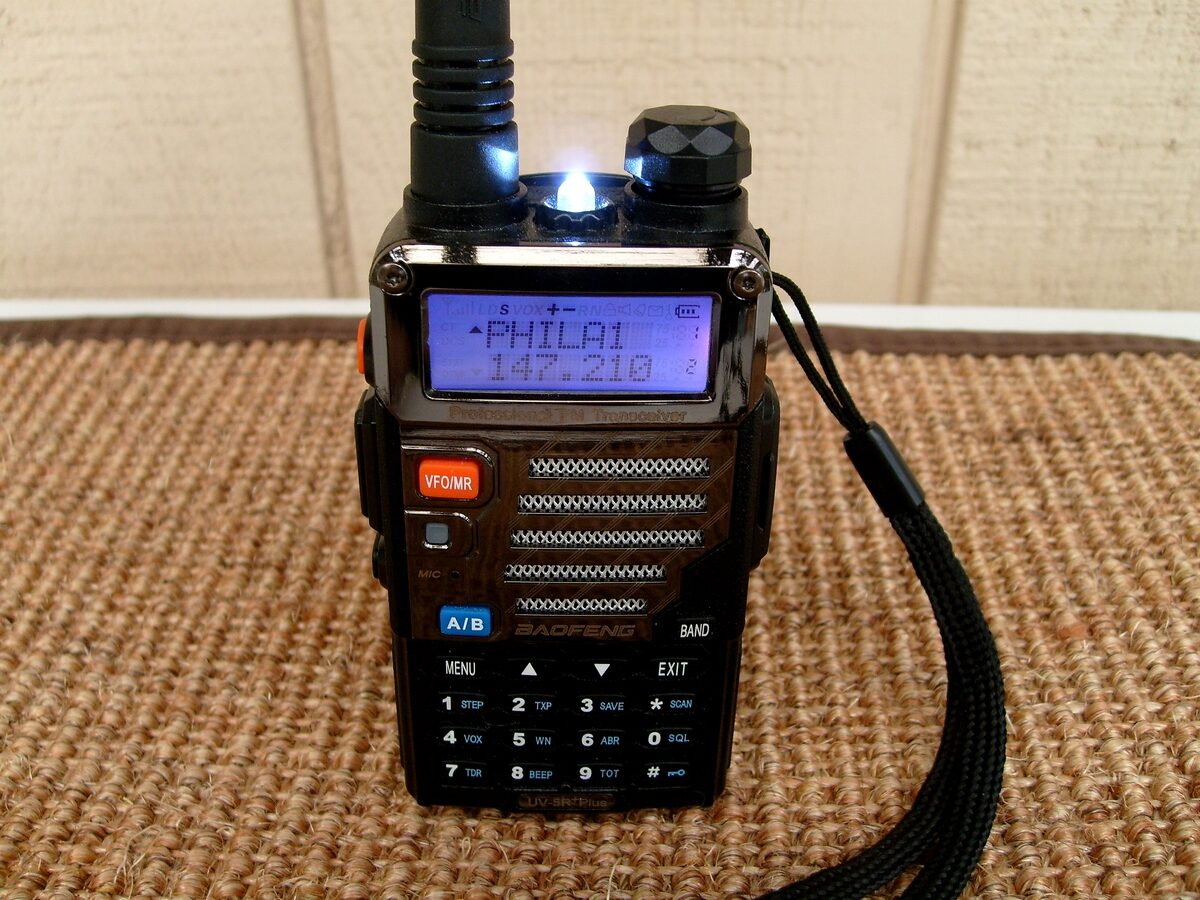
Fifty dollars is a real budget in ham radio — it just buys different things than marketing suggests. It will not buy "36-mile range" (nothing handheld does); it will buy a radio that hits every repeater in town, survives being learned on, and tells you whether this hobby is for you.
Every pick below is dual-band (2 m / 70 cm), CHIRP-or-app programmable, and cheap enough that a mistake doesn't hurt. We're equally clear about what the money doesn't buy — receive filtering, transmit purity, and support are where cheap radios cut corners. All of them need a Technician license to transmit.
Top picks for 2026
Independently chosen for beginners. We never show live prices — tap through to check the current price.
TIDRADIO TD-H3
USB-C charging and Bluetooth app programming remove the two classic beginner obstacles: dead cradle chargers and driver-fighting cables. Realistic 5 W output and CHIRP support when you outgrow the app.
Baofeng UV-5R
Around $20, with fifteen years of accessories, guides, and fixes one search away. The stock antenna is weak and the menus are hostile — both are rites of passage, and both are fixable for a few dollars.
Quansheng UV-K5
Community firmware turns it into a spectrum-scope-wielding, wide-receiving experimenter's toy. If flashing firmware sounds fun rather than frightening, nothing at this price is more entertaining.
Baofeng UV-5RM
The UV-5R formula with USB-C charging and a bigger channel map. Marketed 10 W tests closer to 6–8 W — typical for the class — but the quality-of-life updates are real.
Radioddity GA-510
Tri-power UV-5R-class radio whose big-pack option runs a full field day of monitoring. A good pick if your use case is long shifts of mostly listening.
Retevis RT85
A no-surprises 8 W dual-bander that programs in CHIRP and costs little enough to live permanently in a glovebox or loaner bag.
How we picked (and what we ignored)
Criteria for this list: street price reliably under $50, dual-band FM with removable antenna, a sane programming path (CHIRP or a decent phone app), and a large enough user community that answers are one search away. We ignored marketing wattage (tested output on these is typically 4–8 W regardless of the box number) and "1000-channel" boasts that mean nothing on a radio you'll load with 30 repeaters.
One structural note: at this price every radio is a Chinese superhet-on-a-chip design. The differences that matter are charging (USB-C vs cradle), programming workflow, and battery — not RF performance, which is broadly similar across the class.
What under-$50 radios cut (the honest part)
- Receiver front-end selectivity. Near strong transmitters (downtown, hilltop parks) cheap radios hear phantom mixes of pagers and broadcast FM. Name-brand radios reject this better; it's the single biggest real-world difference.
- Transmit cleanliness. Budget radios have historically been flagged for spurious emissions. Stay in band, use low power when close to the repeater, and don't feed a big amplifier from one.
- Support and warranty. There effectively isn't any — the community is your support department. Fortunately it's a very good one.
- Stock antennas. Universally mediocre. The first $15 of any budget goes to a proper whip — see best UV-5R antennas.
None of this makes them bad first radios. It makes them honest $20–$45 radios.
Quick comparison
| Radio | Charging | Programming | Battery | Pick if… |
|---|---|---|---|---|
| TIDRADIO TD-H3 | USB-C | Bluetooth app + CHIRP | 1500 mAh | You want the least setup friction |
| Baofeng UV-5R | Cradle | CHIRP cable | 1800 mAh | Absolute lowest cost |
| Quansheng UV-K5 | USB-C (recent runs) | CHIRP + custom firmware | 1600 mAh | You like flashing firmware |
| Baofeng UV-5RM | USB-C | CHIRP (recent builds) | 1800 mAh | UV-5R familiarity, modern charging |
| Radioddity GA-510 | Cradle | CHIRP cable | Large pack option | Longest runtime per charge |
| Retevis RT85 | Cradle | CHIRP cable | 1800 mAh | Simple spare/loaner unit |
Spend the leftover money on these, not a second radio
If the radio came in at $25, the remaining $25 has two correct destinations:
- A real antenna (~$15). A Nagoya NA-771-class whip adds more usable range than any radio swap at this price. Match the SMA gender to your radio.
- A programming path (~$10–$15). An FTDI-chip cable for CHIRP, unless your radio programs by app. Hand-keying repeater offsets and tones through a Baofeng menu is how new hams quit — see the CHIRP walkthrough.
Later, when you know you're staying: a roll-up J-pole for the window (portable antennas) and eventually a SWR meter if you add outdoor antennas.
When to spend more than $50 instead
Skip this whole price class if any of these is true: you live somewhere RF-dense and need real receive filtering (a used Yaesu FT-60R class radio fixes that), you need weatherproofing beyond IP54 for work outdoors, or the radio is part of a safety plan where failure isn't acceptable. The step-up options live in best beginner handhelds — and honestly, a $50 radio plus a $120 radio later is a perfectly good career arc.