Best Portable and Roll-Up Antennas for VHF/UHF
A roll-up J-pole is the highest-value antenna in ham radio: $25–$35, weighs a few ounces, packs flat, and — hung 15–20 feet up — turns a struggling 5-watt handheld into a station that works repeaters 30+ miles out. The N9TAX Slim Jim is the go-kit standard, the Ed Fong DBJ-1 is the ARRL-published classic, and a mag-mount like the Nagoya UT-72 covers the car. Match the connector to your radio and hang it as high and vertical as you can.
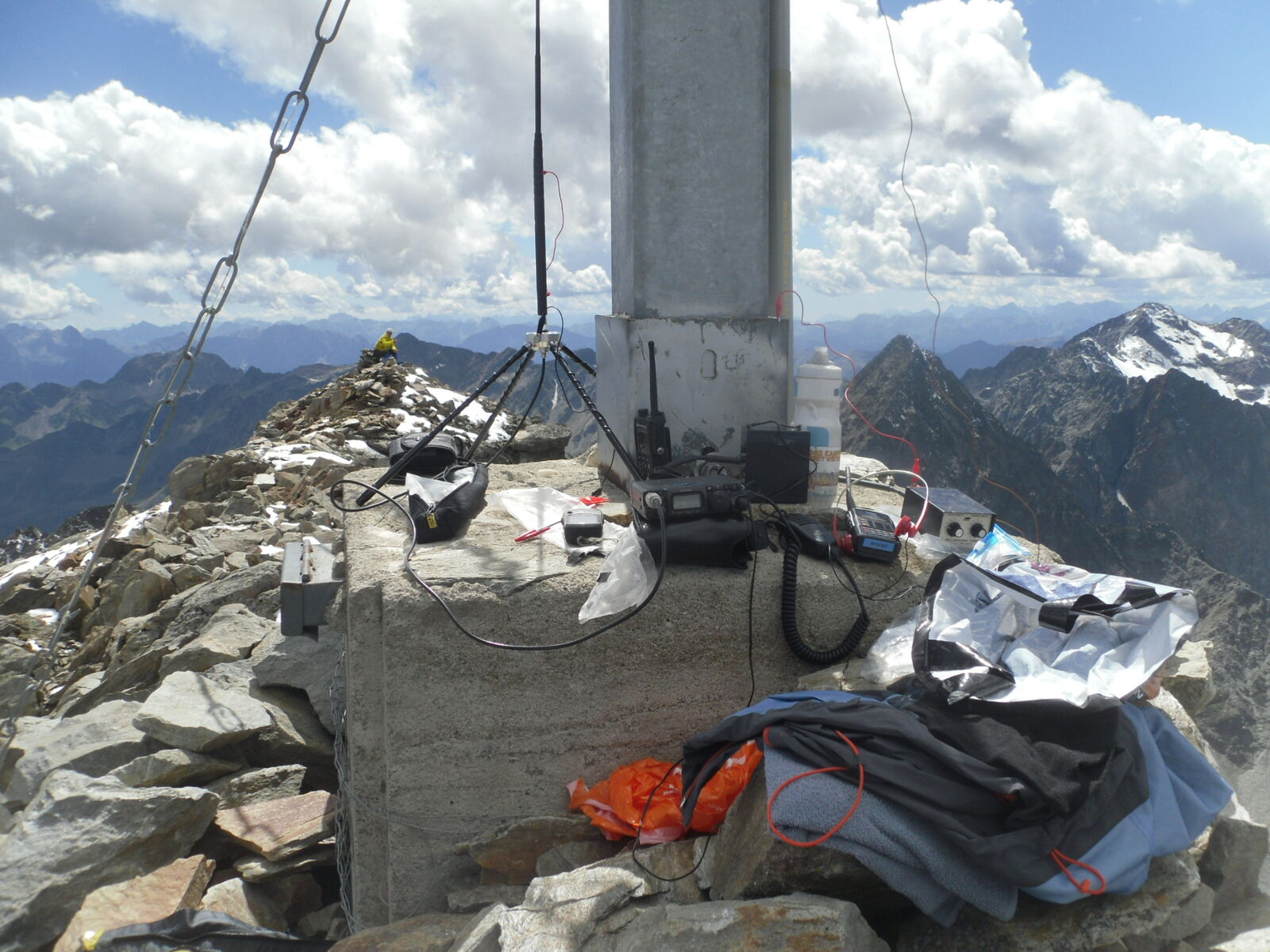
The weakest link in every handheld setup is the antenna's height and size — physics a bigger radio can't fix but a $30 piece of ladder line can. Portable antennas are how backpackers, apartment dwellers, and emergency-kit builders get real range without a tower: unroll, hoist, connect, and your handheld suddenly behaves like a base station.
These picks favor rugged, packable, no-tuner designs that work with the radios in our beginner handheld guide. Apartment-specific (indoor/stealth) options get their own treatment in apartment antennas.
Top picks for 2026
Independently chosen for beginners. We never show live prices — tap through to check the current price.
N9TAX Slim Jim
The ladder-line Slim Jim thousands of kits are built around: flat-packing, tough, pre-tuned, with a leader of RG-174 so the heavy coax connects at ground level. Hang it high and a 5 W HT grows up fast.
Ed Fong DBJ-1
Designed by Ed Fong (WB6IQN) and published by the ARRL — hand-built, ~100 W capable, and available in a tube version when a portable antenna decides to become a permanent one.
SignalStuff Slim Jim
A flexible Slim Jim from the Signal Stick folks, sized for POTA packs and bug-out bags where every ounce is argued about. Choose the lead/connector that matches your radio at order time.
Nagoya UT-72
Mag-mount whip with an SMA lead that plugs straight into a Baofeng-style HT — the fastest possible upgrade for driving: the roof becomes your ground plane and the signal stops fighting the car body.
Abbree AL-800
A 42-inch folding whip for when there's nothing to hoist a roll-up from. Real gain is modest whip-class (~2 dBi) despite tactical marketing — but length and getting the radiator above your head genuinely help.
Why a roll-up J-pole embarrasses your rubber duck
Three compounding wins:
- It's a real half-wave antenna. A stock rubber duck is a compromised coil that loses several dB versus a full-size element — the roll-up gives those dB back.
- It gets height. The antenna goes 15–20 feet up a tree, flagpole, or window frame while you stay comfortable. On VHF, height is nearly everything — check the difference in the range calculator (6 ft vs 20 ft of height roughly doubles your horizon).
- It separates the antenna from your body. Your torso absorbs a surprising chunk of a belt-worn HT's signal; ten feet of coax fixes that for free.
The practical result reported by thousands of go-kit builders: repeaters that were scratchy or unreachable on the duck become armchair copy. Same radio, same watts.
Slim Jim vs DBJ-1: the two roll-up designs
The two dominant roll-ups are close cousins with different construction:
| Slim Jim (ladder line) | DBJ-1 (Ed Fong) | |
|---|---|---|
| Construction | 450/300Ω ladder line, folded J | Twin-lead J-pole in PVC or roll-up form |
| Bands | 2 m / 70 cm dual-band versions standard | Dual-band, ARRL-published design |
| Gain | ~2–3 dBi | ~2–3 dBi |
| Power handling | ~25–50 W typical | ~100 W |
| Signature strength | Packs absolutely flat, very light | Slightly more robust matching, tube version for permanent mounting |
Performance differences between them are within measurement noise — buy on connector, power rating, and price. Both need to hang vertically and away from metal to deliver their numbers.
Deployment: the 90-second field setup
- Throw a line: paracord over a branch (a water bottle makes a fine throwing weight) or use a painter's pole / flag pole.
- Hoist the antenna vertical, top attachment point up, bottom gently guyed or weighted so it doesn't wrap around things in wind.
- Keep coax modest: 10–20 ft of RG-58/RG-316 is the sweet spot — long enough for height, short enough that coax loss doesn't eat your gains (UHF is unforgiving in thin cable).
- Adapt to the radio: most roll-ups terminate in BNC or SO-239; carry the SMA adapter that matches your HT's gender.
- Check SWR once at home before trusting it in the field — see the tuning guide. Quality roll-ups arrive pre-tuned; verify anyway.
The car counts as portable: HT mag mounts
A magnetic-mount whip with an SMA pigtail (the Nagoya UT-72 pattern) is the roll-up's vehicular sibling: slap it on the roof, plug it into the handheld, and the car's steel becomes your ground plane. Expect the same class of transformation — the difference between missing the repeater at the highway split and full-quieting into it. For permanent installs and 50 W mobiles, step up to the antennas in best 2 m mobile antennas; the mag-mount-to-HT combo is specifically the zero-installation portable play.
Building the kit around the antenna
A complete portable RF kit that fits in a gallon zip bag:
- Roll-up J-pole + 15 ft coax (pre-connected, coiled on a winder)
- 30 ft paracord + throwing weight
- Adapters: SMA-M and SMA-F to BNC/SO-239 (both genders — you will loan gear)
- Printed card of local repeaters and simplex plan (how to build the list)
- Spare battery or AA shell for the HT
That bag plus any $25 handheld is a legitimate emergency communications capability — the reasoning lives in emergency communications 101.